Let’s Get Scientific: What Sand Fleas Really Are
If we’re talking facts — not beach gossip — a sand flea is a crustacean, not a flea. Its full name? Emerita talpoida. Sounds fancy, but these little guys are anything but.
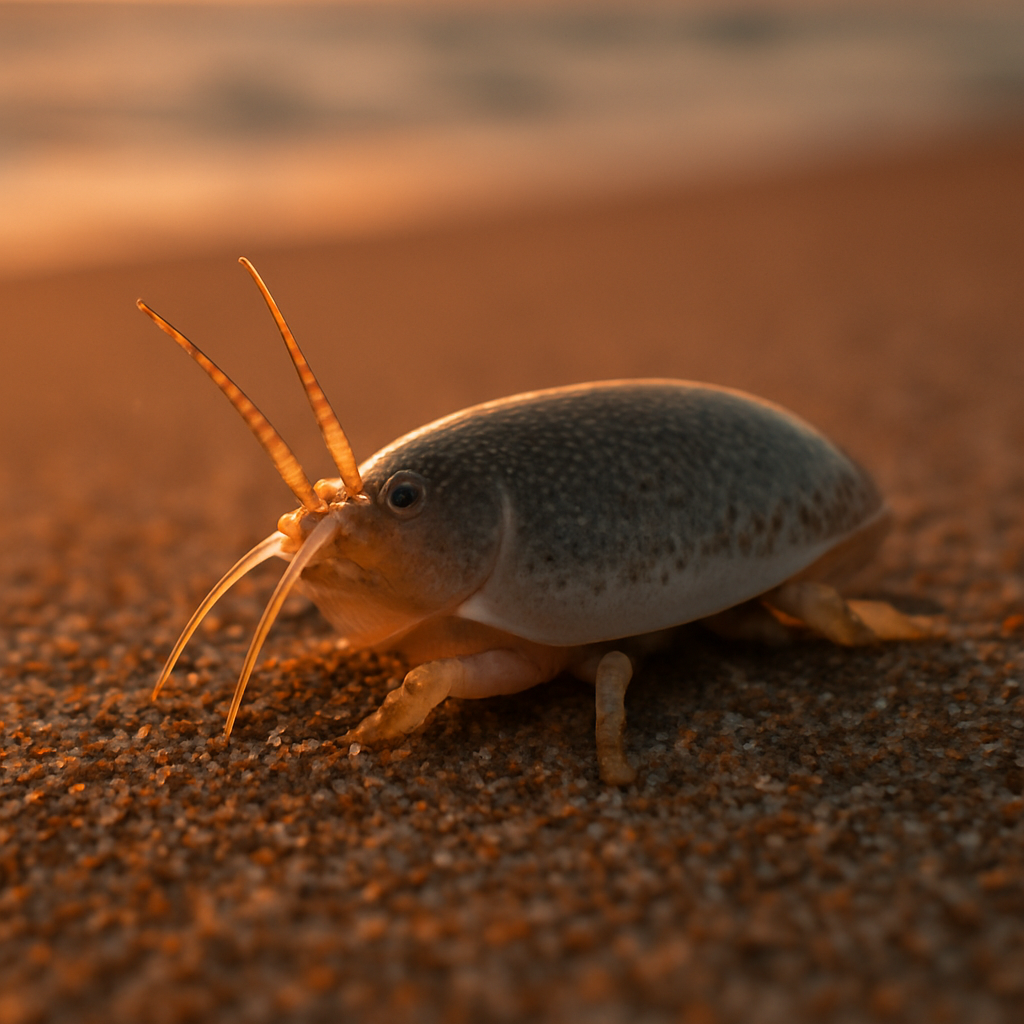
They live in the swash zone — that rolling edge where the ocean meets the shore. When the water pulls back, they dig backwards into the wet sand like it owes them rent. You’ll spot them in clusters if you’re watching close — smooth, pale gray or tan, usually about half an inch to an inch long. Barrel-shaped, tucked in tight, built to ride the tide.
They’re not hunters. They’re not biters. They just hang out, filter plankton, and mind their own business using feathered antennae that stick up like a weird alien periscope.
The Big Question: Do Sand Fleas Bite?
No. Sand fleas do not bite. Period.
You might think they do because your ankles are on fire, but it’s not them. What’s actually chewing on you is a biting midge — a.k.a. a no-see-um. Tiny, nearly invisible, and completely infuriating.
No-see-ums love:
- Early mornings and twilight
- Damp, still air
- Your exposed ankles
Sand fleas? They’re digging for plankton, not your blood. Don’t blame the innocent.
Why Everyone Blames the Wrong Bug
“Sand flea” is basically the junk drawer of beach bug terms. If it’s small and annoying, it gets tossed in there. Biting midge? Sand flea. Sea lice? Sand flea. Slight breeze? Definitely sand fleas.
It’s not your fault — everyone does it. But now you know better. And knowing is half the battle (the other half is bug spray and sarcasm).
Fun Fact: Fishermen Love These Things
Here’s a twist — fishermen dig sand fleas on purpose.
Literally.
Using long-handled rakes, surf anglers scoop up sand fleas by the dozen and toss them into bait buckets. They’re prime targets for pompano, red drum, and sheepshead. To fish, they’re filet mignon with legs.
Some people eat them too — roasted, fried, even raw in parts of the world. We’re not saying you should. Just… know that someone has.
How to Avoid the Real Biters
Since you’re not actually dealing with sand fleas when you’re being bitten, here’s how to avoid the real culprits:
- Don’t lay directly on damp sand, especially early or late in the day.
- Bring a towel or chair — your skin isn’t welcome on the bug buffet.
- Bug spray helps, but rinse off before you jump in the water (don’t poison the fish, come on).
- Steer clear of the wrack line — that rotting strip of seaweed where every pest within 100 yards is throwing a party.
The Bottom Line: Know Your Bugs
Here’s your cheat sheet:
| Name | Bites? | Jumps? | Lives In | Real Name |
|---|---|---|---|---|
| Sand Flea | ❌ No | ❌ No | Wet sand, swash zone | Emerita talpoida |
| No-See-Um | ✅ Yes | ❌ No | Marshy dunes, still air | Biting midge |
| Whatever Bit You | ✅ Yes | ❓ Maybe | Doesn’t matter anymore | Rage incarnate |
Stop blaming the wrong critter. Sand fleas are crusty little weirdos, but they’re harmless.
No-see-ums? Certified beach villains.
Got a Bug Story?
Ever been chewed alive by invisible beach demons?
Found a weird little bug and thought it was going to eat your soul?
Tell us about it in the comments. We love a good scratchy horror story.